See it running.
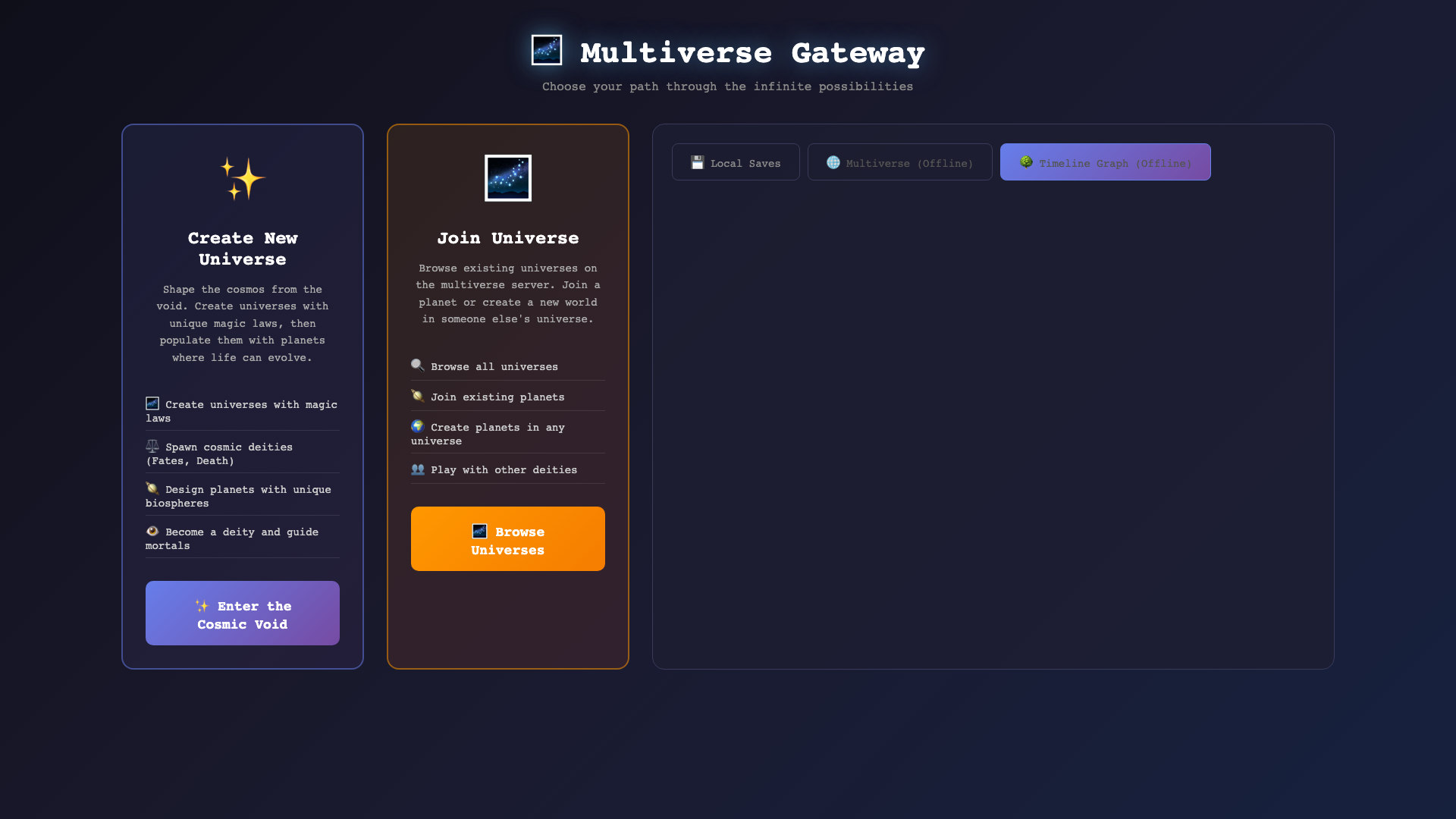
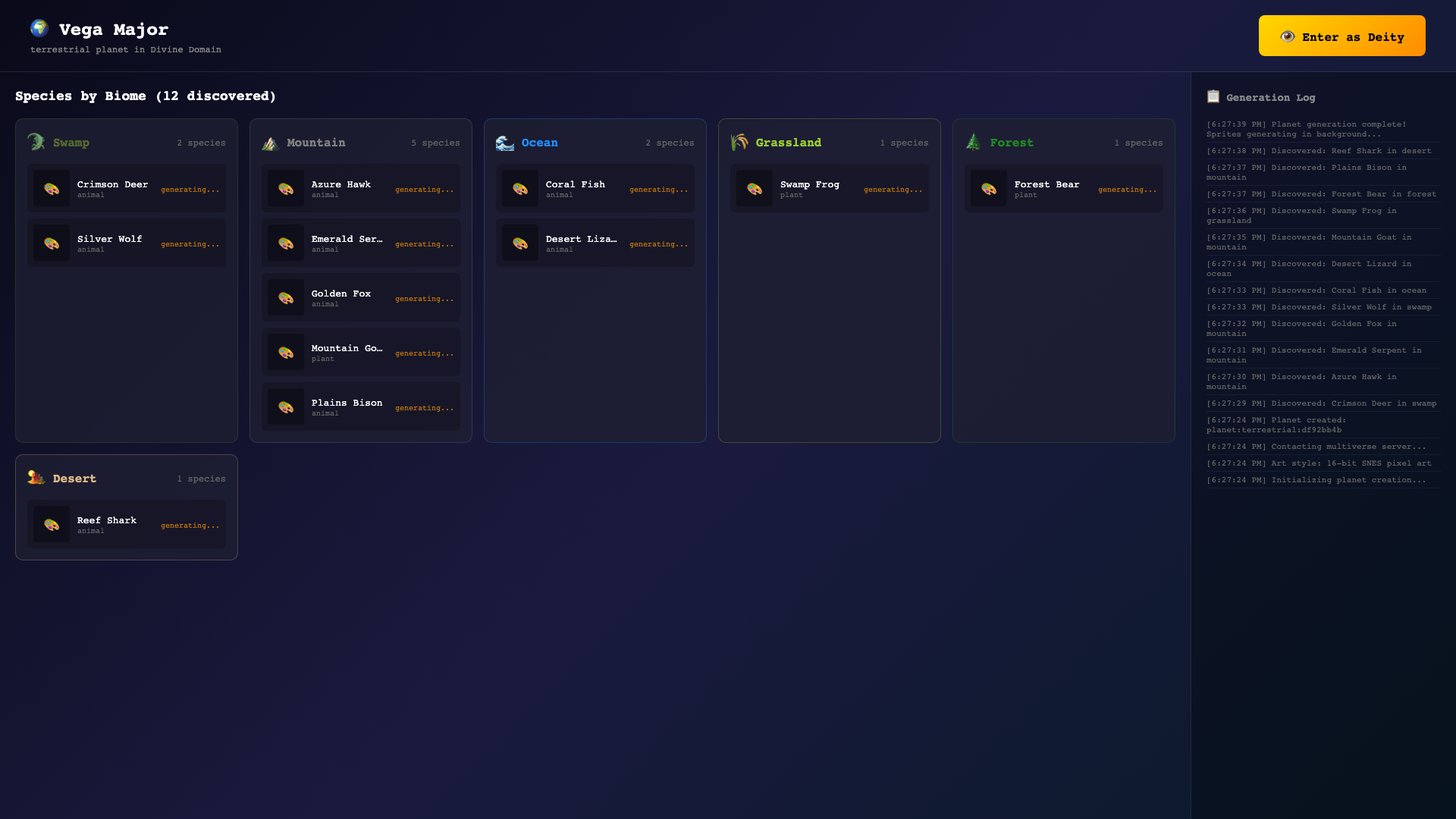
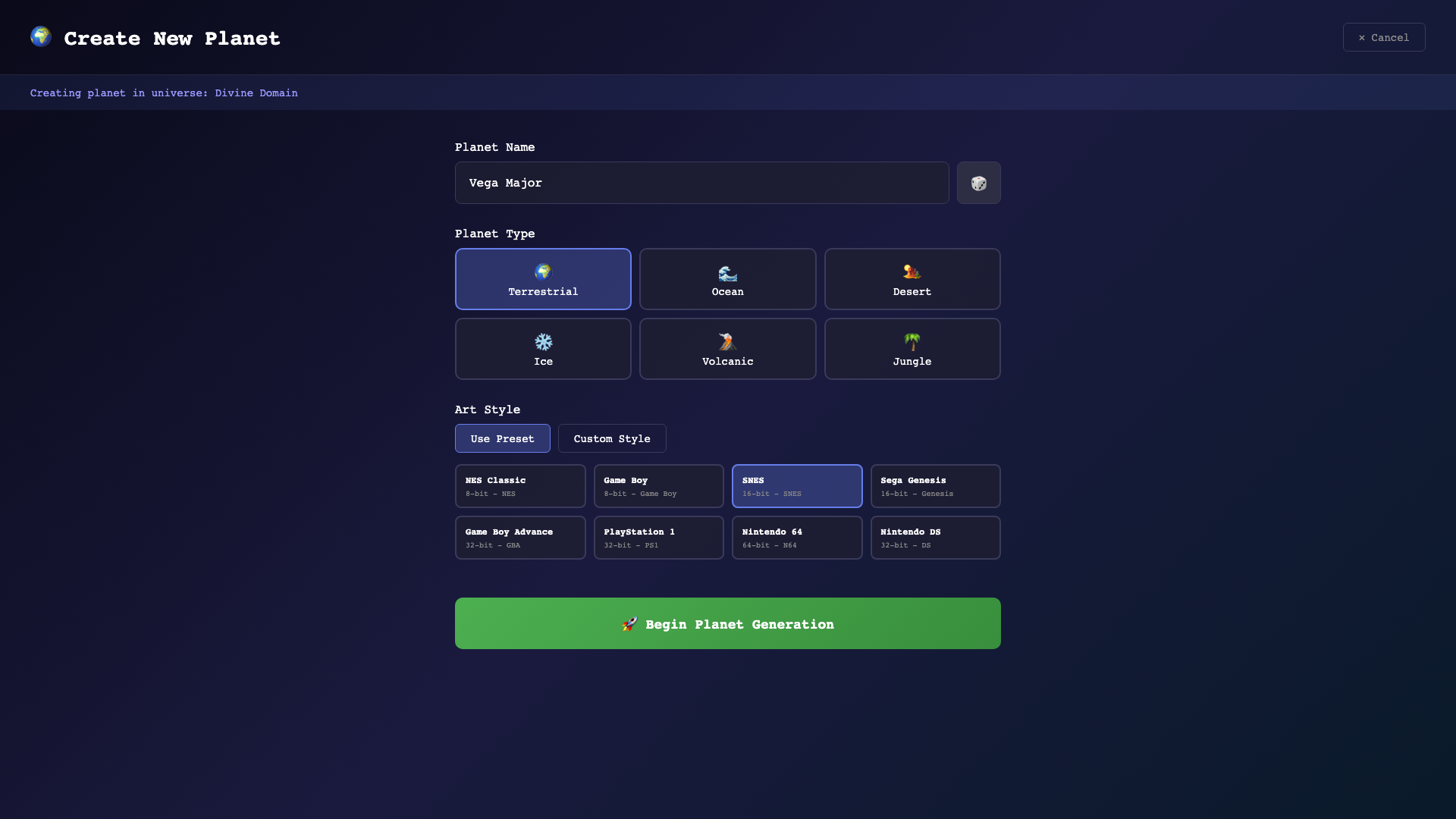
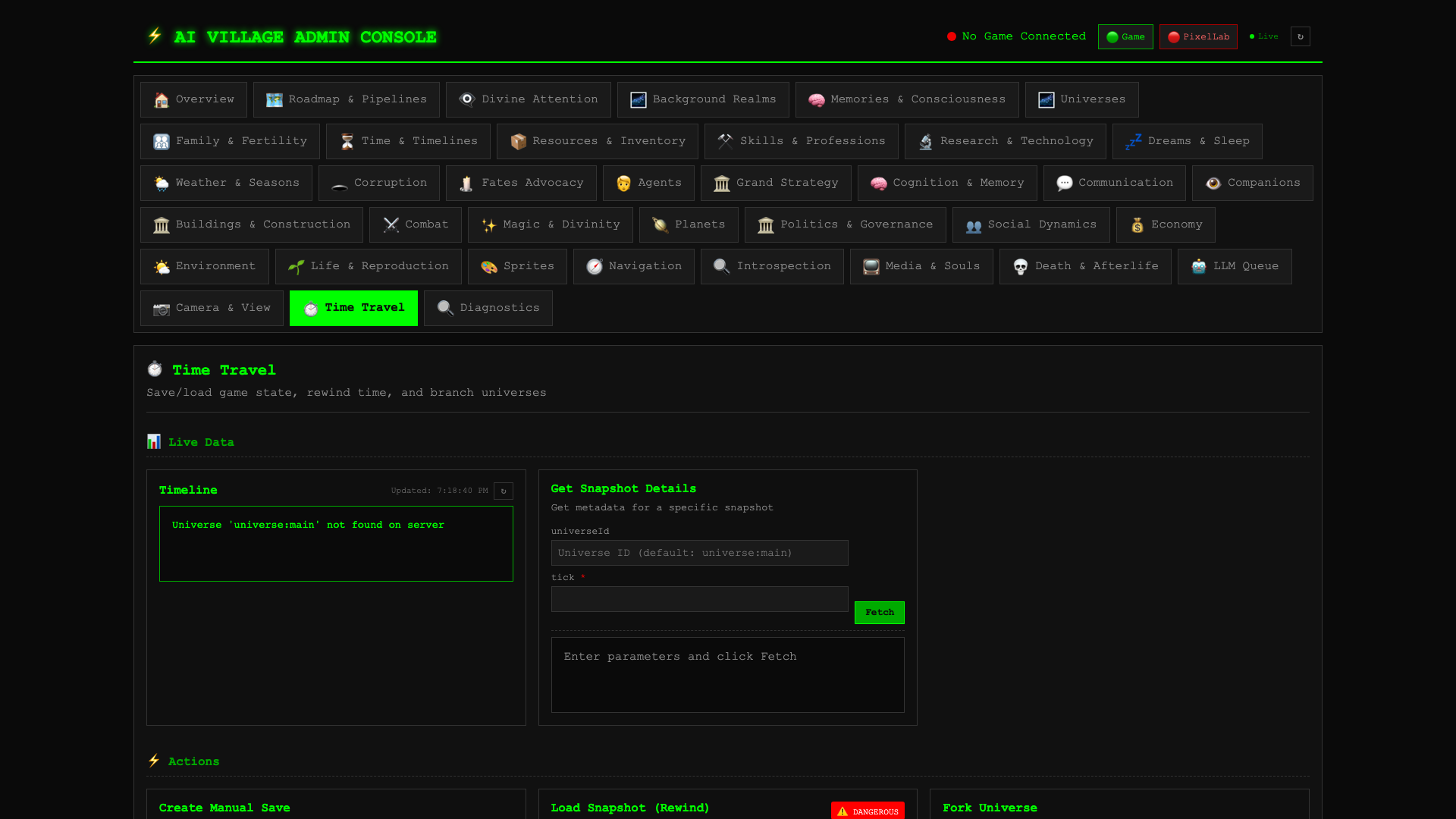
More screenshots coming as the beta progresses. Agent conversations, magic effects, and a live village are in the pipeline.
Nobody programmed them to do any of this.
FREE BETA — LIVE NOW
Multiverse: The End of Eternity is a deep simulation where AI-powered agents live autonomous lives in a persistent world. Watch them work, love, worship, fight, and build civilizations — then rewind time when everything goes wrong, or fork the universe to see what happens if it goes differently.
Agents have needs, memories, personalities, and relationships. They make decisions using real AI language models, so they surprise you. They form opinions, hold grudges, fall in love, and grieve losses. They build temples to gods they invented, cast spells from 25 different magical traditions, and pass knowledge down to their children.
No fake randomness or theatrical AI. When fire spreads, it follows material properties and wind. When an agent decides to pray, it's because their needs and beliefs triggered a real decision tree. Every system responds to the same underlying simulation — not scripted events, not theatre.
Fire propagation, fluid dynamics, temperature, weather. Materials have real properties. Heat transfers. Water flows.
Traits pass from parent to child. Personality is genetic and environmental. Families form dynasties across generations.
Twenty-five fully functional magical traditions. Each with its own rules, costs, and interactions. Composable.
Agents develop beliefs. Enough belief, held collectively, becomes something else. Whether it answers you is a question the simulation resolves.
After death, a psychopomp — an LLM-powered death god — speaks with your soul. It asks what you did with your life. It may pose riddles. Based on your actual in-game actions, it assigns you to heaven, reincarnation, or wandering. It's different every time.
The simulation remembers everything. What you can do with that is yours to find out.
Ocean ecosystems, biome transitions, seasonal changes. The world doesn't stop at the agent level.
Production buildings, resource gathering, crafting chains. Agents build, upgrade, and manage their material civilization.
Every magical tradition is a fully-simulated system with its own rules, costs, and interactions. Spells compose from verb + noun. Traditions can synergize or conflict.
Twenty-five traditions. You'll find them in play.
The simulation supports fourteen fully-implemented reproductive strategies. Human binary-sex courtship is one option. So is Kemmer — Ursula K. Le Guin's system from The Left Hand of Darkness, where agents are androgynous by default and shift to a reproductive role only during a periodic biological cycle, with the role determined by the partner they're with.
There is also a Three-Sex paradigm requiring three compatible agents for conception. A Quantum paradigm where an agent's reproductive role remains in superposition until observed during courtship. An Asexual paradigm for budding species. A Hivemind Parasitic paradigm. More.
We put Le Guin's Kemmer in the simulation because she was right. If you're going to simulate species, you have to be willing to simulate the full range of what biology does. The human default is a paradigm, not a universal. Design Notes
The game asks: what happens when autonomous agents build a community? We asked the same question about our dev team. Development Log
Inspired by Dwarf Fortress, RimWorld, Caves of Qud, Ars Magica, The Sims, and NetHack. Dedicated to Tarn Adams and the Dwarf Fortress legacy. Dedicated also to Ursula K. Le Guin, who imagined better worlds before the tools existed to simulate them.
The code is open source. Read it. Mod it. The same tools the developers use are available to everyone.
More screenshots coming as the beta progresses. Agent conversations, magic effects, and a live village are in the pipeline.
200+ systems running. Gods have been born. Your civilization starts now.
Pay what you want. No loot boxes. No dark patterns. Ever. The code is open source.